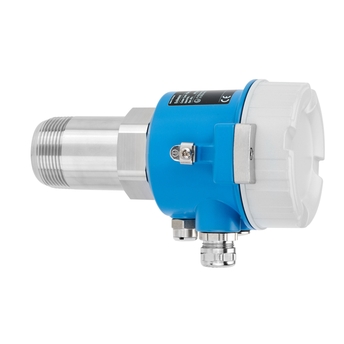
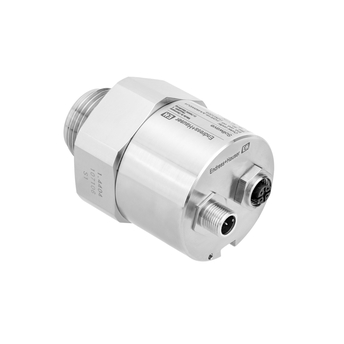
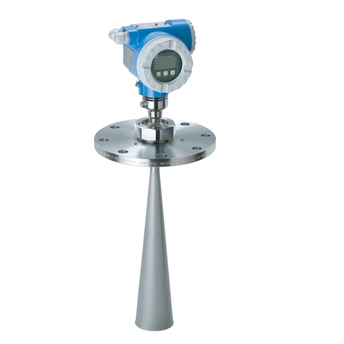
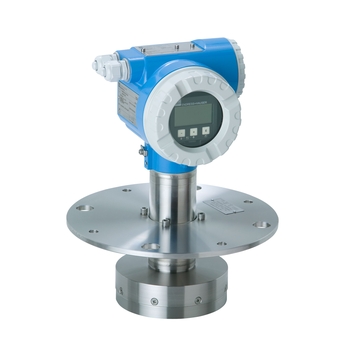
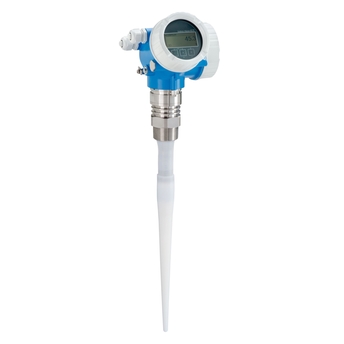
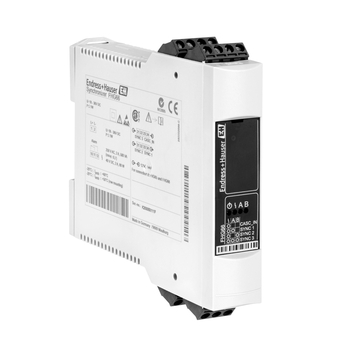
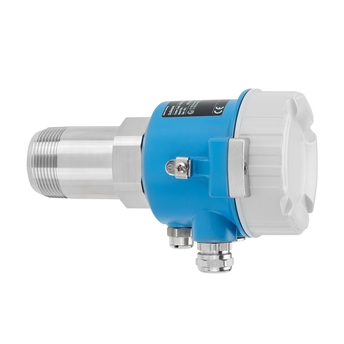
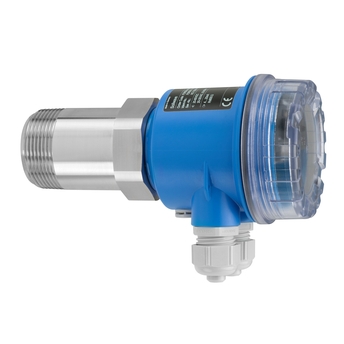
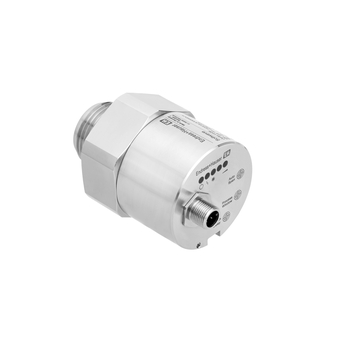
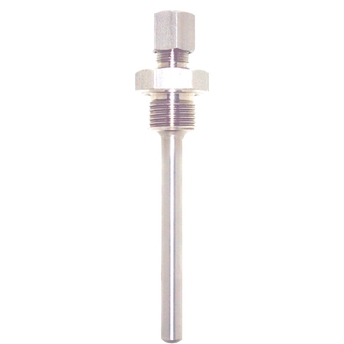
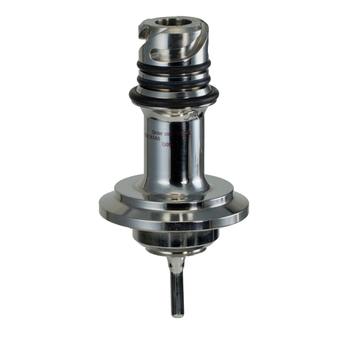
Microwave barrier transmitter Soliwave FQR57
Transmitter for non-contact point level detection and bulk flow monitoring
-
Measuring principle
Microwave barrier
-
Characteristic / Application
Transmitter
Non-contact point level detection and flow monitoring
Detecting, counting and positioning of objects
Monitoring of material transfer points
Detection and analysis of deposits and contamination
Non-contact installation:
Waves emitted from outside
Within installation:
Waves emitted within installation (contact) -
Specialities
With optional integrated bulk flow monitoring
Parallel mode with up to 5 channels
Detection range limit: max. 100 m
Detection range flow: max. 10 m, depending on bulk solids -
Supply / Communication
Via process transmitter with control unit Nivotester FTR525
-
Ambient temperature
-40 °C…+70 °C
(-40 °F…+158 °F) -
Process temperature
Non-contact installation: any
Within installation:
-40 °C…+70 °C
(-40 °F…+158 °F)
With HT-Adapter:
up to +450 °C (+842 °F) -
Process pressure / max. overpressure limit
Non-contact installation: any
Within installation:
0.5 bar…6.8 bar
(7.2 psi … 99 psi) abs.
With HD-Adapter:
up to +21 bar (+305 psi) abs. -
Min. density of medium
Solid weight: > 10 g/l
-
Main wetted parts
Non-contact installation:
No wetted parts
Within installation:
316Ti, PTFE or Ceramic -
Process connection
Threads:
1-1/2″ R, 1-1/2″ G, 1-1/2″ NPT -
Communication
Via process transmitter with control unit Nivotester FTR525
-
Certificates / Approvals
ATEX, IEC Ex
-
Design approvals
EN10204-3.1
-
Options
Sight glass
High temperature adapter
High pressure adapter
Installation bracket
FAR50, FAR51, FAR52, FAR53, FAR54, FAR55 -
Components
Transceiver: FDR57
Process transmitter: FTR525 -
Application limits
Solid weight: < 10 g/l
Field of application
The Soliwave microwave barrier uses a non-contact procedure for detection of point levels and bulk flow (flow / no flow, trend). The device is also suitable for detecting and counting objects, detection of deposits as well as monitoring of filling processes and material transfer points. It can be installed in containers, conduits, hoppers, filling stations, shafts, filters or on free fall shafts. It is possible to take a measurement through non-metallic container materials from the outside.
Non-contact (wear- and maintenance-free) limit detection (min/max) and flow monitoring (flow/no flow, trend) for bulk solids.Detecting, counting and positioning of objectsDetection and analysis of deposits and contamination in filters Monitoring of filling processesMonitoring of material transfer pointsFor high temperature applications up to 450°C (+842°F)For high pressure applications up to 20bar (+290psi)International explosion protection certificates
Benefits
Simple assembly with R 1½, 1½ NPT thread or G 1½ (with lock nut) Mechanically robust construction ensures cost savings over the whole life cycle of the product: No wear and tear, process-wetted ceramic sensor diaphragm (optional), long serviceable life, maintenance free Increased safety of the point level monitoring by optional integrated bulk flow monitoring Measuring principle almost independent of the process properties Can also be used in difficult applications, where other measurement methods fail Easy operation via the Nivotester FTR525 with graphical display saves time and reduces costs
Microwave barrier transceiver Soliwave FQR16
Ultra-compact microwave barrier for non-contact point level detection, piece goods counting and object detection
-
Measuring principle
Microwave barrier
-
Characteristic / Application
Microwave barrier
Non-contact point level detection
(min/max, e.g. full and empty detection for overflow
and dry run protection) for all types of bulk solids
(from powdery to lumpy) and liquids, also in potentially
explosive atmospheres (dust Ex).
Detection, counting, and positioning of objects
Object detection on conveyor belts -
Specialities
Detection range: max. 20 m
-
Supply / Communication
18 V … 30 V DC,
Plug M12 -
Ambient temperature
-20 °C … +60 °C (-4 °F … +140 °F)
-
Process temperature
Non-contact installation: any
Within installation:
-20 °C … +60 °C (-4 °F … +140 °F)
With HT-Adapter:
up to +450 °C (+842 °F) -
Process pressure / max. overpressure limit
Non-contact installation: any
Within installation:
0.5 bar … 6.8 bar (7.2 psi … 99 psi) abs.
With HP-Adapter:
up to +21 bar (+305 psi) abs. -
Min. density of medium
Solid weight: > 10 g/l
-
Main wetted parts
Non-contact installation:
no wetted parts
Contact installation:
316L, PTFE -
Process connection
ISO228-1: G1″, G1-1/2″
ASME: NPT1-1/2″ -
Process connection hygienic
Non-contact installation
-
Communication
3-wire-DC-PNP,
2 DC-PNP-outputs -
Certificates / Approvals
ATEX, IEC Ex
-
Design approvals
EN10204-3.1
-
Hygienic approvals
EG1935/2004
-
Options
Mounting bracket
Counternut
Welding sleeve
Connection cable
Connecting cable
High-pressure adapter
High-temperature adapter
Extension for HT adapter
Mounting flange
Sight glass fitting
FAR50, FAR51, FAR52, FAR54 -
Components
FDR16
-
Application limits
Solid weight: < 10 g/l
Field of application
The Soliwave FQR16 is an ultra-compact transceiver for non-contact point level detection of bulk solids and liquids, as well as piece goods counting and object detection. The Soliwave FQR16 is used together with the FDR16. The microwave barrier works with a non-contact detection method and can also be used in applications with difficult-to-access or confined installation conditions due to its ultra-compact design. For non-metallic container materials, measurement from the outside is possible.
The microwave barrier Soliwave FDR16 and FQR16 detects minimum or maximum point levels of powdery to lumpy bulk solids and liquids, for example to protect against overflow and dry running. The device is also suitable for piece goods counting and object detection. The device can be used in multiple industries like primaries, energy and food.
Benefits
Non-contact measuring principle – detection almost independent of process propertiesHigh security – permanent self-diagnosis and full self-testFirst microwave barrier with IP69 protection classificationMeets the requirements of EU 1935/2004 Very simple and cost-effective commissioningSafe detection – non-contact measuring method guarantees wear-free and maintenance-free continuous operationRobust design – housing made of stainless steel
Radar measurement Micropilot FMR540
Horn antenna and parabolic antenna for custody transfer applications
-
Measuring principle
Level radar
-
Characteristic / Application
Horn antenna:
High precision measurement for for storage tanks up to 20 m (65ft)
Parabolic antenna:
High precision measurement for free space applications up to 40 m (131 ft) -
Supply / Communication
4-wire (HART)
-
Frequency
K-band (~26 GHz)
-
Accuracy
+/- 1 mm
-
Ambient temperature
Standard:
-40°C…80°C
(-40°F…176°F)
For calibration to regulatory standards:
-25°C…60°C
(-13°F…131°F) -
Process temperature
-40°C…200°C
(-40°F…392°F) -
Process pressure / max. overpressure limit
Horn: Vacuum…16 bar (232 psi)
Parabolic: Vacuum…6 bar (87 psi)
Use of UNIflange: Vacuum…1 bar (14.5 psi) -
Main wetted parts
316L
-
Process connection
Horn Antenna: DN100, DN150 Flange
UNIFlange DN150, DN200, DN250
Parabolic antenna: UNIflange with Top Target
positioner DN200, DN250
For dk value < 1.9, contact Endress+Hauser -
Communication
4…20 mA HART
-
Certificates / Approvals
ATEX, FM, CSA, IEC Ex, NEPSI
-
Application limits
Maximum measuring range is dependent on the tank form and/or application
Strong condensate or build-up formation
FMR53x
Existing stilling wells with non-ideal measuring conditions
FMR532
Field of application
Micropilot FMR540 is used for custody transfer and inventory control applications with NMi- and PTB-approvals and meets the requirements according to OIML R85 and API 3.1B. FMR540 with parabolic antenna is particularly suited for free space applications up to 40m and with horn antenna for free space applications that disallow the use of a parabolic antenna due to tank/nozzle geometry. Cost-effective and simple installation via 4-wire cable with HART and 24 V DC intrinsically safe power supply.
Parabolic antenna suited for free space applications up to 40m offers high beam focusing for applications with nozzle situated close to tank wall, 4″/DN100 horn antenna suited for free space applications.
Process connection: Flange
Temperature: -40 to +200°C (-40 to +392°F)
Pressure: Vacuum to +16bar (Vacuum to +232psi)
Maximum measuring range: 40m (131ft)
Accuracy: Better than ±1mm
K-band: 26GHz
International explosion protection and custody transfer certificates, overfill prevention WHG, SIL
Benefits
Better than 1mm accuracyNational approvals (NMi, PTB) for custody transferApplicable as stand-alone system or integrated into tank gauging systems via the Tank Side Monitor NRF590Cost-effective and simple installation via 4-wire cable with HART and 24 V DC intrinsically safe power supplyAlignment device to compensate any flange inclinationEasy on-site operation via menu-driven alphanumeric displayEasy commissioning, documentation and diagnostics via operating software (FieldCare)
Radar measurement Micropilot FMR532
For high accurate non-contact level measurement in stilling well applications in custody transfer
-
Measuring principle
Level radar
-
Characteristic / Application
-
Supply / Communication
4-wire (HART)
-
Frequency
C-band (~6 GHz)
-
Accuracy
+/- 1 mm, custody transfer
-
Ambient temperature
Standard:
-40 °C … 80 °C
(-40 °F … 176 °F)
For calibration to regulatory standards:
-25 °C … 60 °C
(-13 °F … 131 °F) -
Process temperature
-40 °C … 150 °C
(-40 °F … 302 °F) -
Process pressure / max. overpressure limit
Vacuum … 25 bar
(Vaccum … 362 psi) -
Main wetted parts
316L + PTFE
-
Process connection
DN150 … DN300 / 6″ … 12″
-
Max. measurement distance
40 m (131 ft)
-
Communication
4 … 20 mA
-
Certificates / Approvals
ATEX, FM, CSA, IEC Ex, NEPSI
-
Design approvals
EN 10204-3.1
NACE MR0175, MR0103 -
Marine approval
GL/ ABS
-
Application limits
Maximum measuring range is dependent on the tank form and/or application
Free space and many baffles
FMR540
Field of application
The Micropilot FMR532 is used for custody transfer and inventory control applications with NMi- and PTB-approvals. It meets the relevant requirements according to OIML R85 and API 3.1B. The FMR532 free space radar with planar antenna is specifically suited for stilling well applications. Micropilot FMR532 offers cost-effective and simple installation via 4-wire cable with HART and 24 V DC intrinsically safe power supply.
With planar antenna particularly suited for stilling well applications with ranges up to 38m (124ft).
Process connection: Flange
Temperature: -40 to +150°C (-40 to +302°F)
Pressure: Vacuum to +25bar (Vacuum to +362psi)
Maximum measuring range: 38m (124ft)
Accuracy: Better than ±1mm
C-band: 6GHz
International explosion protection and custody transfer certificates, overfill prevention WHG, SIL, marine approval
Benefits
0.8mm accuracy (2σ value)National approvals (NMi, PTB) for custody transferApplicable as stand-alone system or integrated into tank gauging systems via the Tank Side Monitor NRF590Easy on-site operation via menu-driven alphanumeric displayEasy commissioning, documentation and diagnostics via FDT/DTM technology (FieldCare)Cost-effective and simple installation via 4-wire cable with HART and 24 V DC intrinsically safe power supplyUnique drip-off antenna design eliminates measurement error due to condensation build-up
Radar measurement Time-of-Flight Micropilot FMR53
For simple level measurement applications in liquids
-
Measuring principle
Level radar
-
Characteristic / Application
For common non-contact continuous level measurement in liquids,
especially suited for small process connections and for chemically aggressive media;
Rod antenna with PTFE coating -
Specialities
Heartbeat Technology,
SIL 2 according to IEC 61508,
Bluetooth® commissioning,
Operation and maintenance SmartBlue App,
Safety and reliability with Multi-Echo Tracking,
HistoROM,
RFID TAG for easy identification -
Supply / Communication
2-wire (HART / PROFIBUS PA/ FOUNDATION Fieldbus)
4-wire (HART)
Bluetooth® wireless technology and App (optional) -
Frequency
C-band (~6 GHz)
-
Accuracy
+/- 6 mm (0.24 in)
-
Ambient temperature
-40…+80 °C
(-40…+176 °F) -
Process temperature
-40…+150 °C
(-40…+302 °F) -
Process pressure / max. overpressure limit
Vacuum…40 bar
(Vacuum…580 psi) -
Main wetted parts
PTFE, PVDF
-
Process connection
Thread:
MNPT 1 1/2, R 1 1/2
Flange:
DN50…DN150,
ASME 2″…6″,
JIS 10K -
Max. measurement distance
Standard: 20 m (66 ft)
-
Communication
4…20 mA HART
PROFIBUS PA
FOUNDATION Fieldbus
Bluetooth® wireless technology -
Certificates / Approvals
ATEX, FM, CSA C/US, IEC Ex, JPN Ex, INMETRO, NEPSI, KC, EAC, UK Ex
-
Safety approvals
Overfill protection WHG
SIL -
Design approvals
EN 10204-3.1
ASME B31.3
AD2000 -
Options
Display,
Remote operation via SmartBlue App using Bluetooth®,
Customized parameterization,
Gas-tight feed through,
PWIS free -
Application limits
Maximum measuring range is dependent on the tank form and/or application
Nozzle height >250 mm:
FMR51, FMR52, FMR54
Low DK:
FMR51, FMR52, FMR54
Field of application
Micropilot FMR53 for simple level measurement applications in liquids. With its slim rod antenna, FMR53 free space radar is particularly suited for small process connections. The PTFE coating of the rod antenna and flange plating guarantee resistance also in aggressive media. The Micropilot FMR53 is used for continuous, non-contact level measurement of liquids, pastes and slurries. The measurement is not affected by changing media, temperature changes, gas blankets or vapors.
Especially suited for small process connections, PTFE sensors usable in chemically aggressive media.
Process connections: Thread or flange
Temperature: -40 to +150°C (–40 to +302°F)
Pressure range: -1 to +40bar (–14.5 to +580psi)
Maximum measuring range: 20m (66ft)
Accuracy: ±6mm
C-band: 6GHz
International explosion protection certificates, overfill prevention WHG, SIL, 5-point linearity protocol
Benefits
Reliable non-contact measurement even for changing product and process conditionsHistoROM data management concept for fast and easy commissioning, maintenance and diagnosticsHighest reliability even in the presence of obstructions in the vessel due to new Multi-Echo Tracking evaluationHardware and software developed according to IEC 61508 up to SIL3 (in homogeneous redundancy)Heartbeat Technology for a cost-effective and safe plant operation during the entire life cycleSeamless integration into control or asset management systems and intuitive, menu-guided operation concept (on-site or via the control system)World’s easiest proof test concept for SIL and WHG saves time and cost
Radiometric measurement Synchronizer FHG66
Synchronization of an unlimited number of Gamma Modulators FHG65 for unhindered measurement
-
Measuring principle
Radiometric
-
Characteristic / Application
Synchronization of an unlimited number of Gamma Modulators FHG65
-
Specialities
If multiple Gamma Modulators FHG65 are used
-
Supply / Communication
DC: 18…36 V
-
Ambient temperature
Mounted individually:
-20°C …60°C
( -4°F … 142°F)
Mounted in a row without lateral spacing:
-20°C… 50°C
( -4°F …122°F)
Installed in protective housing:
-20°C … 40°C
( -4°F … 104°F) -
Communication
Relay: 1x SPDT
-
Measuring principle
Radiometric
-
Characteristic / Application
Synchronization of an unlimited number of Gamma Modulators FHG65
-
Specialities
If multiple Gamma Modulators FHG65 are used
-
Supply / Communication
DC: 18…36 V
-
Ambient temperature
Mounted individually:
-20°C …60°C
( -4°F … 142°F)
Mounted in a row without lateral spacing:
-20°C… 50°C
( -4°F …122°F)
Installed in protective housing:
-20°C … 40°C
( -4°F … 104°F) -
Communication
Relay: 1x SPDT
-
Measuring principle
Radiometric Limit
-
Communication
Relay: 1x SPDT
-
Measuring principle
Radiometric Limit
-
Communication
Relay: 1x SPDT
-
Measuring principle
Radiometric Density
-
Characteristic / Application
Synchronization of an unlimited number of Gamma Modulators FHG65
-
Supply / Communication
DC: 18…36 V
-
Ambient temperature
Mounted individually:
-20°C …60°C
( -4°F … 142°F)
Mounted in a row without lateral spacing:
-20°C… 50°C
( -4°F …122°F)
Installed in protective housing:
-20°C … 40°C
( -4°F … 104°F) -
Options
Relay: 1x SPDT
-
Specialities
If multiple Gamma Modulators FHG65 are used
Field of application
The Gamma Synchronizer FHG66 is made for synchronization of an unlimited number of Gamma Modulators FHG65 for unhindered measurement with Gammapilot FMG60. The Gamma Modulator FHG65 is made for effective suppression of background and extraneous radiation (e. g. from non-destructive materials testing). The FHG66 observes the correct operation of just one single modulator.
Synchronization of an unlimited number of Gamma Modulators FHG65
Observation of single modulators
Benefits
Unhindered measurement with Gammapilot FMG60 in the event of interference radiation from non-destructive material testing up to 50μSv/h or fluctuating background radiationHighest system safety thanks to safe measuring signalsContinuing measurements which increase plant availability and reliabilityCost efficient system without maintenance requirementsEasy installation in conjunction with FQG61/62 source containersEasy integration into existing systems and fast operation
Microwave barrier transceiver Soliwave FDR57
Transceiver for non-contact point level detection and bulk flow monitoring
-
Measuring principle
Microwave barrier
-
Characteristic / Application
Transceiver
Non-contact point level detection and flow monitoring
Detecting, counting and positioning of objects
Monitoring of material transfer points
Detection and analysis of deposits and contamination
Installation:
Non-contact installation (tranmission window) or front-flush installation (contact) -
Specialities
With optional integrated bulk flow monitoring
Parallel mode with up to 5 channels
Detection range limit: max. 100 m
Detection range flow: max. 10 m, depending on bulk solids -
Supply / Communication
Via process transmitter with control unit Nivotester FTR525
-
Ambient temperature
-40 °C…+70 °C
(-40 °F…+158 °F) -
Process temperature
Non-contact installation: any
Within installation:
-40 °C … +70 °C
(-40 °F … +158 °F)
With HT-Adapter:
up to +450 °C (+842 °F) -
Process pressure / max. overpressure limit
Non-contact installation: any
Within installation:
0.5 bar … 6.8 bar
(7.2 psi … 99 psi) abs.
With HD-Adapter:
up to +21 bar (+305 psi) abs. -
Min. density of medium
Solid weight: > 10 g/l
-
Main wetted parts
Non-contact installation:
no wetted parts
Within installation:
316Ti, PTFE or Ceramic -
Process connection
Threads:
1-1/2″ R, 1-1/2″ G, 1-1/2″ NPT -
Communication
Via process transmitter with control unit Nivotester FTR525
-
Certificates / Approvals
ATEX, CSA C/US, IEC Ex
-
Design approvals
EN10204-3.1
-
Options
Sight glass
High temperature adapter
High pressure adapter
Installation bracket
FAR50, FAR51, FAR52, FAR53, FAR54, FAR55 -
Components
Transmitter: FQR57
Process transmitter: FTR525 -
Application limits
Solid weight: < 10 g/l
Field of application
The Soliwave microwave barrier uses a non-contact procedure for detection of point levels and bulk flow (flow / no flow, trend). The device is also suitable for detecting and counting objects, detection of deposits as well as monitoring of filling processes and material transfer points. It can be installed in containers, conduits, hoppers, filling stations, shafts, filters or on free fall shafts. It is possible to take a measurement through non-metallic container materials from the outside.
Non-contact (wear- and maintenance-free) limit detection (min/max) and flow monitoring (flow/no flow, trend) for bulk solids.Detecting, counting and positioning of objectsDetection and analysis of deposits and contamination in filters Monitoring of filling processesMonitoring of material transfer pointsFor high temperature applications up to 450°C (+842°F)For high pressure applications up to 20bar (+290psi)International explosion protection certificates
Benefits
Simple assembly with R 1½, 1½ NPT thread or G 1½ (with lock nut) Mechanically robust construction ensures cost savings over the whole life cycle of the product: No wear and tear, process-wetted ceramic sensor diaphragm (optional), long serviceable life, maintenance free Mechanically compatible to FQR50/FDR50 and FQR56/FDR56 microwave barrier, existing process connections can be used; likewise, accessories such as adapter flanges, installation brackets and sight glasses can be used again Increased safety of the point level monitoring by optional integrated bulk flow monitoring Measuring principle almost independent of the process properties Can also be used in difficult applications, where other measurement methods fail Easy operation via the Nivotester FTR525 with graphical display saves time and reduces costs
Microwave barrier transceiver Soliwave FDR56
Transceiver for non-contact point level detection in bulk solids
-
Measuring principle
Microwave barrier
-
Characteristic / Application
Transceiver
Non-contact point level detection and flow monitoring
Detecting, counting and positioning of objects
Monitoring of material transfer points
Detection and analysis of deposits and contamination
Installation:
Non-contact installation (transmission window) or front-flush installation (contact) -
Specialities
Measuement range: max. 100 m
-
Supply / Communication
85 … 253 VAC
20 … 60 VDC/ 20 … 30 VAC -
Ambient temperature
-40 °C…+70 °C
(-40°F…+158°F) -
Process temperature
Non-contact installation: any
Within installation:
-40 °C…+70 °C (-40 °F…+158 °F)
With HT-Adapter:
up to +450 °C (+842 °F) -
Process pressure / max. overpressure limit
Non-contact installation: any
Within installation:
0.5 bar … 6.8 bar (7.2 psi … 99 psi) abs.
With HD-Adapter:
up to +21 bar (+305 psi) abs. -
Min. density of medium
Solid weight: > 10 g/l
-
Main wetted parts
Non-contact installation:
no wetted parts
Within installation:
316Ti or Aluminium;
PTFE or Ceramic -
Process connection
1-1/2″ R, 1-1/2″ G, 1-1/2″ NPT
-
Process connection hygienic
Non-contact installation
-
Communication
Relays SPDT
Solid-State-Relaiy
4 … 20 mA -
Certificates / Approvals
ATEX, CSA C/US, IEC Ex
-
Design approvals
EN10204-3.1
-
Options
Sight glass
High temperature adapter
High pressure adapter
Installation bracket
FAR50, FAR51, FAR52, FAR53, FAR54, FAR55 -
Components
Transmitter: FQR56
-
Application limits
Solid weight: < 10 g/l
Field of application
The Soliwave FDR56 microwave barrier uses a contact-free procedure for detection of point levels. It can be installed in containers, conduits, shafts or on free fall shafts. It is possible to take a measurement through non-metallic container materials from the outside. Suitable as point level switch for controlling and counting all types of bulk solids. It interacts with the Soliwave FQR56 emitter.
Typical bulk solids are: Wood chips, wood dust or flour; plaster, cement, ash; paper or cardboard shred, gravel, sand, dried powders in general, bags and boxes.Process connections: ThreadsAmbient temperature: -40 to +70°C (-40 to +158°F)Measuring range: Max. 100m (328ft)International explosion protection certificates
Benefits
Highly reliable measurement due to flush-mounted installation and possible non-contact installation as well as indication of the signal strength on the transceiverMechanical robust solution ensures cost savings over the whole life cycle of the product: No wear and tear, process-wetted ceramic sensor diaphragm (optional), long serviceable life, maintenance free Electronics housing can be rotated by 360°, allowing adjustment into optimum position after installationDirect connection of the supply voltage (emitter and receiver separately or together)Mechanically compatible to FQR50/FDR50 microwave barrier, existing process connections can continue to be used; likewise, accessories such as adapter flanges, installation brackets and sight glasses can continue to be used
Microwave barrier transceiver Soliwave FDR16
Ultra-compact microwave barrier for non-contact point level detection, piece goods counting and object detection
-
Measuring principle
Microwave barrier
-
Characteristic / Application
Microwave barrier
Non-contact point level detection
(min/max, e.g. full and empty detection for overflow
and dry run protection) for all types of bulk solids
(from powdery to lumpy) and liquids, also in potentially
explosive atmospheres (dust Ex).
Detection, counting, and positioning of objects
Object detection on conveyor belts -
Specialities
Detection range: max. 20 m
-
Supply / Communication
18 V … 30 V DC,
Plug M12 -
Ambient temperature
-20 °C … +60 °C (-4 … +140 °F)
-
Process temperature
Non-contact installation: any
Within installation:
–20 °C … +60 °C (–4 °F … +140 °F)
With HT-Adapter:
up to +450 °C (+842 °F) -
Process pressure / max. overpressure limit
Non-contact installation: any
Within installation:
0.5 bar … 6.8 bar (7.2 psi … 99 psi) abs.
With HP-Adapter:
up to +21 bar (+305 psi) abs. -
Min. density of medium
Solid weight: > 10 g/l
-
Main wetted parts
Non-contact installation:
no wetted parts
Contact installation:
316L, PTFE -
Process connection
ISO228-1: G1″, G1-1/2″
ASME: NPT1-1/2″ -
Process connection hygienic
Non-contact installation
-
Communication
3-wire-DC-PNP,
2 DC-PNP-outputs -
Certificates / Approvals
ATEX, IEC Ex
-
Design approvals
EN10204-3.1
-
Hygienic approvals
EG1935/2004
-
Options
Mounting bracket
Counternut
Welding sleeve
Connection cable
Connecting cable
High-pressure adapter
High-temperature adapter
Extension for HT-adapter
Mounting flange
Sight glass fitting
FAR50, FAR51, FAR52, FAR54 -
Components
FQR16
-
Application limits
Solid weight: < 10 g/l
Field of application
The Soliwave FDR16 is an ultra-compact transceiver for non-contact point level detection of bulk solids and liquids, as well as piece goods counting and object detection. The Soliwave FDR16 is used together with the FQR16. The microwave barrier works with a non-contact detection method and can also be used in applications with difficult-to-access or confined installation conditions due to its ultra-compact design. For non-metallic container materials, measurement from the outside is possible.
The microwave barrier Soliwave FDR16 and FQR16 detects minimum or maximum point levels of powdery to lumpy bulk solids and liquids, for example to protect against overflow and dry running. The device is also suitable for piece goods counting and object detection. The device can be used in multiple industries like primaries, energy and food.
Benefits
Non-contact measuring principle – detection almost independent of process propertiesHigh security – permanent self-diagnosis and full self-testFirst microwave barrier with IP69 protection classificationMeets the requirements of EU 1935/2004Very simple and cost-effective commissioningSafe detection – non-contact measuring method guarantees wear-free and maintenance-free continuous operationRobust design – housing made of stainless steel
Digital combined pH/ORP sensor Memosens CPS96D
Memosens glass sensor for heavily polluted media in chemical processes, paper or paint production
-
Measuring principle
Potentiometric
-
Application
– Process applications – media with high contamination: emulsions, suspensions, precipitation reactions – min. conductivity >500µS/cm
-
Characteristic
– Rapid response – new, stabilised gel insensitive to contaminations
-
Measurement range
pH 0-14
-
Measuring principle
– Open aperture – double gel reference with ion trap
Pt-disc as additional ORP element.
rH measurment and control of the reference impedance. -
Design
– All shaft lengths with temperature sensor – advanced gel technology – digital electrode with Memosens technology
-
Material
Glass
-
Dimension
Diameter: 12 mm (0.46 inch)
Shaft lengths: 120, 225, 360 and 425 mm
(4.68, 8.77, 14.04 and 16,57 inch) -
Process temperature
max. 110°C
(230°F) -
Process pressure
max. 10 bar
(145 psi) -
Temperature sensor
NTC 30k
-
Connection
Inductive, contactless connection head with Memosens technology
-
Ingress protection
IP68
Field of application
Memosens CPS96D is the expert for fibrous media or media with a high content of suspended solids such as dispersions, precipitation or emulsions. The open aperture guarantees the most reliable, simultaneous pH and ORP measurement for better process control and increased quality. Memosens CPS96D is not the latest Memosens generation. To get information on the new Memosens CPS96E sensor with extended functionality, click here.
Chemical processesPulp and paper industryContaminated media and suspended solids- Dispersions- Precipitation- EmulsionsWith ATEX and IEC approval for use in hazardous areas.
Benefits
Simultaneous measurement of pH, ORP and rH values (in rH mode) for a better process overview Additional platinum electrode enables constant monitoring of reference impedance and thus sensor qualityRobust and resistant to poisoning thanks to stabilized gel and reference with ion trapNot affected by fluctuations in pressure and temperatureMaximum process safety through non-contact inductive signal transmissionEnables predictive maintenance due to storage of sensor and process-specific dataReduced operating costs due to minimized process downtime and extended sensor lifetime
Digital ORP sensor Orbipore CPS92D
Memosens glass sensor for heavily polluted media in chemical processes, paper or paint production
-
Measuring principle
Sensor ORP / Redox
-
Application
Processapplications, heavy soiled media, emulsions, suspensions, precipitations
-
Installation
digital electrode with Memosenstechnology
-
Characteristic
Very robust, easy cleanable.
-
Measurement range
-1500 mV – +1500 mV
-
Measuring principle
– Gel compact electrode with open aperture – measuring part as platinum cap.
-
Design
All shaft lengths – advanced gel technology
-
Material
Glass electrode and platinum cap.
-
Dimension
Diameter: 12 mm (0.46 inch)
Shaft lengths: 120, 225, 360 and 425 mm
(4.68, 8.77, 14.04 and 16,57 inch) -
Process temperature
max. 110°C (230°F)
-
Process pressure
max. 13bar (189psi)
-
Temperature sensor
NTC30k
-
Ex certification
ATEX II IG EEXia IIC T3/T4/T6
FM/CSA Class1 Div.2 in Kombination mit CM42 und CPM153 Messumformer. -
Connection
Memosens
-
Ingress protection
IP68
Field of application
Orbipore CPS92D is the digital specialist for fibrous media or media with a high content of suspended solids such as dispersions, precipitation reactions or emulsions. The open aperture prevents fouling and guarantees you the most reliable measurement under extreme process conditions. Orbipore CPS92D is not the latest Memosens generation. To get information on the new Memosens CPS92E sensor with extended functionality, click here.
Chemical processesPulp and paper industryContaminated media and suspended solids:- Dispersions- Precipitation- EmulsionsWith ATEX, FM, and CSA approval for application in hazardous areas.
Benefits
Open aperture for application in heavily soiled media Low maintenance and long service life due to stabilized gel filling Not affected by fluctuations in pressure and temperatureMaximum process safety through non-contact inductive signal transmissionEnables predictive maintenance due to storage of sensor and process-specific dataReduced operating costs thanks to minimized process downtime and extended sensor lifetime
Digital pH sensor Orbipore CPS91D
Memosens glass sensor for heavily polluted media in chemical processes, paper or paint production
-
Measuring principle
Potentiometric
-
Application
Chemical processes, pulp and paper, flue gas cleaning, contaminated media
-
Characteristic
Analog, digital pH electrodes
Open aperture for contaminated media,
optionally integrated temperature sensor -
Measurement range
0 to 14 pH
-
Measuring principle
Open aperture, double gel reference
-
Design
All shaft lengths with temperature sensor
Advanced gel technology
Digital electrode with Memosens technology -
Material
Glass
-
Dimension
Diameter: 12 mm (0.47 inch)
Shaft lengths: 120, 225, 360 and 425 mm
(4.72, 8.86, 14.17 and 16.73 inch) -
Process temperature
0 to 110 °C (32 to 230 °F)
-
Process pressure
1 to 14 bar (15 to 203 psi)
-
Temperature sensor
Optional with integrated Pt100 or Pt1000
-
Ex certification
ATEX, FM
-
Connection
Inductive, contactless connection head with Memosens technology
-
Ingress protection
IP68
Field of application
Orbipore CPS91D is the digital specialist for fibrous media or media with a high content of suspended solids such as dispersions, precipitation reactions or emulsions. The open aperture prevents fouling and guarantees you the most reliable measurement under extreme process conditions. Orbipore CPS91D is not the latest Memosens generation. To get information on the new Memosens CPS91E sensor with extended functionality, click here.
Chemical processesPulp and paper industryContaminated media and suspended solids- Dispersions- Precipitation- Emulsions With ATEX, FM, and CSA approval for application in hazardous areas.
Benefits
Open aperture for application in heavily soiled media Low maintenance and long service life due to stabilized gel filling Not affected by fluctuations in pressure and temperatureMaximum process safety through non-contact inductive signal transmissionEnables predictive maintenance due to storage of sensor and process-specific dataReduced operating costs thanks to minimized process downtime and extended sensor lifetime
Digital combined pH/ORP sensor Memosens CPS76D
Memosens glass electrode for the chemical and life sciences industries
-
Measuring principle
Potentiometric
-
Application
Hygienic and sterile applications, process
-
Characteristic
CIP/SIP and autoclavable – high accuracy – biocompatibility of the gel inside – version upside-down installation available – pressurized reference (6 bar)
Pt-disc as additional ORP element.
rH measurment and control of the reference impedance. -
Measurement range
pH 0-14
-
Measuring principle
– ceramic diaphragm – Ion trap
-
Design
– All shaft lengths with temperature sensor – advanced gel technology – digital electrode with Memosens technology
-
Material
glass / ceramic
-
Dimension
Diameter: 12 mm (0.46 inch)
Shaft lengths: 120, 225, 360 and 425 mm
(4.68, 8.77, 14.04 and 16,57 inch) -
Process temperature
-15°C … 140°C
(5°F – 284°F) -
Process pressure
max. 13 bar
(188 psi)depends on selected version -
Temperature sensor
NTC 30k
-
Connection
Inductive, digital connection head with Memosens technology.
-
Ingress protection
IP68
Field of application
Memosens CPS76D is the expert for simultaneous pH and ORP measurement in demanding processes and hygienic applications, offering a better process control and increased quality. The sensor measures reliably at high temperatures and is non-toxic assuring highest safety of your products. Memosens CPS76D is not the latest Memosens generation. To get information on the new Memosens CPS76E sensor with extended functionality, click here.
Process technology and monitoring of processes with:- Quickly changing pH values- High proportion of electrode poisons such as H2SChemical processesHygienic and sterile applications:- Fermenters- Biotechnology- Life sciences With ATEX, FM, and CSA approval for application in hazardous areas.
Benefits
Simultaneous measurement of pH, ORP and rH values (in rH mode) for a better process overview Additional platinum electrode enables constant monitoring of reference impedance and thus sensor qualityRobust and resistant to poisoning thanks to new acrylamide-free bridge electrolyte and reference with ion trapSuitable for CIP/SIP and autoclavingMaximum process safety through non-contact inductive signal transmissionEnables predictive maintenance due to storage of sensor and process-specific dataReduced operating costs thanks to minimized process downtime and extended sensor lifetime
Digital ORP sensor Ceragel CPS72D
Memosens glass electrode for the chemical and life sciences industries
-
Measuring principle
Sensor ORP / Redox
-
Application
– Hygiene and sterile applications.- Pharmaceuticals, biotechnology, fermenters, contaminating media.
-
Characteristic
– Digital electrode with Memosens-Technology.- Gel-compact-electrode with ceramic diaphragm.- Platinum-cap- CIP/SIP and autoclavable- high accuracy
-
Measurement range
-1500mV – +1500mV
-
Measuring principle
– ceramic diaphragm- double chamber and double gel reference- Platinum-ring
-
Dimension
Diameter : 12mmShaft length : 120,225,360mm
-
Process temperature
-15°C – 140°C
-
Process pressure
max. 16bar
-
Ex certification
ATEX
FM
CSA -
Connection
Inductive transmission of digital measuring signals.
-
Ingress protection
IP68
-
Additional certifications
EHEDG
Field of application
Ceragel CPS72D is the digital specialist for demanding processes and hygienic applications. Its contamination-resistant gel guarantees stable measurement even in flowing media or low conductivity. The sensor measures reliably at high temperatures and is non-toxic assuring highest safety. Ceragel CPS72D is not the latest Memosens generation. To get information on the new Memosens CPS72E sensor with extended functionality, click here.
Process technology and monitoring of processes with:- Quickly changing ORP values- High proportion of electrode poisons such as H2SChemical processesHygienic and sterile applications:- Fermenters- Biotechnology- Life sciences With ATEX, FM, and CSA approval for application in hazardous areas.
Benefits
Sensor resists strong acids and bases and high organic loadsSuitable for CIP/SIP and autoclaving maintaining high accuracyFree from animal-based materials and from acrylamide Maximum process safety through non-contact inductive signal transmissionEnables predictive maintenance due to storage of sensor and process-specific dataReduced operating costs thanks to minimized process downtime and extended sensor lifetime
Digital ORP sensor Ceraliquid CPS42D
Memosens glass electrode for applications with fast-changing medium compositions or low conductivity
-
Measuring principle
Sensor ORP / Redox
-
Application
– Special applications with high requirements with regard to accuracy, speed.- rapidly changing composition of media, highly clogging media, low conductivities.
-
Characteristic
– Digital electrode with Memosens technology – gel-free, refillable electrolyte – greatest accuracy – can be subject to pressure to prevent clogging
-
Measurement range
-1500 mV – +1500 mV
-
Measuring principle
– Liquid filled compact electrode with ceramic diaphragm – platinum ring
-
Dimension
Diameter: 12 mm
Shaft lengths: 120, 225 mm -
Process temperature
-15°C – 130°C
-
Process pressure
max. 8bar
-
Ex certification
ATEX
FM
CSA -
Connection
Inductive transfer of digital signals.
-
Ingress protection
IP68
-
Additional certifications
EHEDG
Field of application
Ceraliquid CPS42D is the digital high performer for harsh chemical applications, media with low conductivity or a considerable content of organic solvents. The sensor is designed for fast response guaranteeing high process safety even in applications with fast-changing media. Ceraliquid CPS42D is not the latest Memosens generation. To get information on the new Memosens CPS42E sensor with extended functionality, click here.
Media with very low conductivities or a considerable amount of organic solvents or alcohols and fast changing media: Chemical industryPower plants, e.g. boiler feed waterLife sciences, e.g. water for injectionWith ATEX, FM and CSA approval for use in hazardous areas.
Benefits
Resistant to poisoning due to constant refilling of KCl bridge electrolyte and separate reference leadApplicable at very low conductivities (= 5 µS/cm) thanks to liquid KCl electrolyteSuitable for cleaning in place (CIP) and sterilization in place (SIP)Perfectly suited for quickly changing media: Combination of liquid KCl electrolyte and ceramic diaphragm enables fast response timeMaximum process safety through non-contact inductive signal transmissionEnables predictive maintenance due to storage of sensor and process-specific dataReduced operating costs due to minimized process downtime and extended sensor lifetime
Digital pH sensor Ceraliquid CPS41D
Memosens glass electrode for the chemical and life sciences industries
-
Measuring principle
Potentiometric
-
Application
Chemical industry, organic chemicals, power stations, food industry, laboratory measurements
-
Characteristic
Analog or digital pH electrodes for process engineering with ceramic diaphragm
and KCl liquid electrolyte -
Measurement range
pH 0 to 14
-
Measuring principle
Liquid-KCl with ceramic diaphragm
-
Design
All shaft lengths with temperature sensor
Digital electrode with Memosens technology -
Material
Glass and ceramic
-
Dimension
Diameter: 12 mm (0.47 inch)
Shaft length: 120, 225, 360 and 425 mm
(4.72, 8.86, 14.17 and 16.73 inch) -
Process temperature
0 to 135 °C (32 to 275 °F)
-
Process pressure
1 to 11 bar abs (15 to 160 psi)
-
Temperature sensor
NTC30k
-
Ex certification
ATEX, FM, CSA
-
Connection
Contactless, inductive, digital connection head with Memosens technology
-
Ingress protection
IP68
-
Additional certifications
3A, EHEDG
Field of application
Ceraliquid CPS41D is the digital high performer for harsh chemical applications, media with low conductivity or a considerable content of organic solvents. The sensor is designed for fast response guaranteeing you high process safety even in applications with fast-changing media. Ceraliquid CPS41D is not the latest Memosens generation. To get information on the new Memosens CPS41E sensor with extended functionality, click here.
Media with very low conductivities or a considerable amount of organic solvents or alcohols and fast changing media: Chemical industryPower plants, e.g. boiler feed waterLife sciences, e.g. water for injectionWith ATEX, FM and CSA approval for use in hazardous areas.
Benefits
Resistant to poisoning due to constant refilling of KCl bridge electrolyte and separate reference leadApplicable at very low conductivities (= 0.1 µS/cm) thanks to liquid KCl electrolyteSuitable for cleaning in place (CIP) and sterilization in place (SIP) Perfectly suited for quickly changing media: Combination of liquid KCl electrolyte and ceramic diaphragm enables fast response time Maximum process safety through non-contact inductive signal transmissionEnables predictive maintenance due to storage of sensor and process-specific dataReduced operating costs due to minimized process downtime and extended sensor lifetime
Digital non-glass pH sensor Ceramax CPS341D
Memosens enamel electrode for food and life sciences industries
-
Measuring principle
Potentiometric
-
Application
Food production, beverage production, quality control, pharmaceutical industry, biotechnology
-
Characteristic
Electrode with pH sensitive enamel and digital Memosens technology
Meets highest demands of measuring accuracy, pressure, temperature, sterility and durability -
Measurement range
pH -2 to 14
-
Measuring principle
Ground diaphragm, liquid KCl-filled reference
-
Design
Only one shaft length, different hygienic process connectors
Integrated temperature sensor -
Material
pH sensitive enamel on a steel carrier
-
Dimension
Diameter: 12 mm (0.47 inch)
Shaft length: 120 mm (4.72 inch) -
Process temperature
0 to 140 °C
(32 to 280 °F) -
Process pressure
0 to 7 bar abs
(0 to 101.5 psi) -
Temperature sensor
NTC 30KΩ
-
Connection
Contactless, inductive, digital connection head with Memosens technology
Field of application
Ceramax CPS341D is the long runner for hygienic applications in food and life sciences industries. The sensor guarantees long-term stability and lowest maintenance wherever it is applied. Thanks to Memosens digital sensor technology, CPS341D combines maximum process and data integrity with simple operation. It resists corrosion and moisture, enables lab calibration and facilitates predictive maintenance.
Food production, also highly pasty mediaBeverage production and fillingLife sciences:- Water treatment- Active ingredient production- Active ingredient preparation- Biotechnology
Benefits
Long-term stability over many yearsHygienic design: Suitable for cleaning in place (CIP) and sterilization in place (SIP)High mechanical stability due to pH-sensitive enamel on a steel carrierInsensitive to soiling thanks to large pH measuring surfaceMaximum process safety through non-contact inductive signal transmission Enables predictive maintenance due to storage of sensor and process-specific data Reduced operating costs due to minimized process downtime and extended sensor lifetime
Digital pH sensor Memosens CPS31D
Memosens glass electrode for application in drinking water and swimming pools
-
Measuring principle
Potentiometric
-
Application
Drinking water and swimming pool water,
pH compensation for measuring free chlorine -
Characteristic
Standard applications in water, long lifetime
-
Measurement range
pH 1 to 12
-
Measuring principle
Gel filled reference with one or three diaphragms, optional saltring
-
Design
Shaft with temperature sensor
-
Material
Glass and Ceramic
-
Dimension
Diameter: 12 mm (0.47 inch)
Shaft length: 120 mm (4.70 inch) -
Process temperature
0 to 80 °C
(32 to 176 °F) -
Process pressure
1 to 4 bar
(15 to 60 psi) -
Temperature sensor
NTC 30k
-
Ex certification
None
-
Connection
Memosens plug-in head for digital, non-contact data transmission
-
Ingress protection
IP68
Field of application
Memosens CPS31D is the digital expert for pH compensation in disinfection processes. Its three diaphragms make it suitable for minimum conductivity while its low drift guarantees stable measurement. The sensor makes sure that swimming pool water is agreeable and drinking water tasteful. Memosens CPS31D is not the latest Memosens generation. To get information on the new Memosens CPS31E sensor with extended functionality, click here.
Drinking waterSwimming pool waterpH compensation for free chlorine measurement
Benefits
Reliable measurement at minimum conductivity thanks to three diaphragmsLow drift by very low level of ion depletion in electrolyteOptional salt ring for extended operating timeMaximum process safety through non-contact inductive signal transmission Enables predictive maintenance due to storage of sensor and process-specific dataReduced operating costs due to minimized process downtime and extended sensor lifetime
Digital combined pH/ORP sensor Memosens CPS16D
Memosens glass electrode for standard applications
-
Measuring principle
Potentiometric
-
Application
Standard applications in process and environment, long-term monitoring, processes with stable conditions, water treatment
-
Characteristic
Combination of pH and ORP electrode for standard applications in process technology and environmental engineering
Poison-resistant reference with ion trap -
Measuring principle
Gel compact electrode with PTFE ring-diaphragm with ion trap
Pt-disc as additional ORP element
rH measurment and control of the reference impedance -
Design
All shaft lengths with temperature sensor
Advanced gel technology
Digital electrode with Memosens technology -
Material
Glass and PTFE
-
Dimension
Diameter: 12 mm (0.47 inch)
Shaft Lengths: 120, 225 and 360 mm
(4.72, 8.86 and 14.17 inch) -
Process temperature
0 to 135 °C (32 to 275 °F)
-
Process pressure
1 to 17 bar (15 to 246 psi)
-
Temperature sensor
NTC 30KΩ
-
Connection
Inductive, digital connection head with Memosens technology
-
Ingress protection
IP68
Field of application
Memosens CPS16D is the digital all-rounder for simultaneous pH and ORP measurement offering better process control and increased quality. The sensor features a dirt-repellent PTFE diaphragm for process and environment applications with long-term stable conditions. Memosens CPS16D is not the latest Memosens generation. To get information on the new Memosens CPS16E sensor with extended functionality, click here.
Long-term monitoring or limit control in processes with stable process conditions:- Chemical processes- Pulp and paper industry- Power stations (e.g. flue gas cleaning)- Incinerator plants- Mining- Wastewater
Water treatment:- Drinking water- Cooling water- Well water With ATEX and IEC approval for use in hazardous areas.
Benefits
Simultaneous measurement of pH, ORP and rH values (in rH mode) for a better process overview Additional platinum electrode enables constant monitoring of reference impedance and thus sensor qualityRobust and resistant to poisoning thanks to large PTFE ring diaphragm and reference with ion trapSuitable for harsh applications: Process glass for highly alkaline media and pressure-stable up to 17 bar (246 psi)Maximum process safety through non-contact inductive signal transmissionEnables predictive maintenance due to storage of sensor and process-specific dataReduced operating costs thanks to minimized process downtime and extended sensor lifetime
Digital ORP sensor Orbisint CPS12D
Memosens glass electrode for standard applications
-
Measuring principle
Sensor ORP / Redox
-
Application
Standard applications in process and environment
Long-term monitoring of quiet stable processes -
Characteristic
Digital, contactless electrode with Memosens technology
Very robust, heavy-duty applications, high pressure version -
Measurement range
-1500 mV to +1500 mV
-
Measuring principle
Gel compact electrode with teflon diaphragm and double gel reference
Measuring part as gold-pin or platin ring -
Design
All shaft lengths with temperature sensor
Advanced gel technology
Inductive, digital data transfer with Memosens technology -
Material
Glass electrode with teflon diaphragm
-
Dimension
Diameter: 12 mm (0.47 inch)
Shaft lengths: 120, 225 and 360 mm
(4.72, 8.86 and 14.17 inch) -
Process temperature
-15 to 135 °C
(5 to 275 °F) -
Process pressure
0 to 16 bar
(0 to 232 psi) -
Temperature sensor
NTC 30K
-
Ex certification
ATEX II 1G EEX ia IIC T3/T4/T6
FM/CSA Class 1 Div.2, in combination with CM42 and CPM153 transmitters -
Connection
Inductive, digital connection head with Memosens technology
-
Ingress protection
IP68
-
Additional certifications
Biocompatibility validated according to ISO 10993-5:1993 and USP(current version)
TÜV certificate for pressure resistance up to 16 bar with triple overpressure safety
Electromagnetic compatibility complies with EN 61326:1997
Field of application
Orbisint CPS12D is the digital all-rounder for process and environment technology. It measures reliably and accurately even in hazardous areas. Designed for low maintenance and a long operating life, the electrode offers you best value for money. Orbisint CPS12D is not the latest Memosens generation. To get information on the new Memosens CPS12E sensor with extended functionality, click here.
Long-term monitoring and limit monitoring of processes with stable process conditions:- Chemical industry- Paper industry- Power plants (e.g. flue gas washers)- Incineration plantsWater treatment:- Drinking water- Cooling water- Well waterWith ATEX, FM, CSA approval for use in hazardous areas.
Benefits
Robust electrode with long poison diffusion path, requires low maintenance due to large, dirt-repellent PTFE ring diaphragm Suitable for harsh applications: Process glass for highly alkaline media and pressure-stable up to 16 bar (232 psi) Various measuring elements for application in oxidizing or reducing mediaMaximum process safety through non-contact, inductive signal transmissionEnables predictive maintenance due to storage of sensor and process-specific dataReduced operating costs thanks to minimized process downtime and extended sensor lifetime
Digital pH sensor Orbisint CPS11D
Memosens glass electrode for standard applications
-
Measuring principle
Potentiometric
-
Application
Long-term monitoring, processes with little change
Water and wastewater treatment -
Characteristic
Analog, digital pH electrodes for standard applications in process and environmental technology
Dirt-repellent PTFE diaphragm, built-in temperature sensor -
Measurement range
pH 0 to 14
-
Measuring principle
Gel compact electrode with PTFE ring-diaphragm
-
Design
All shaft lengths with temperature sensor
Advanced gel technology
Digital electrode with Memosens technology -
Material
Glass and PTFE
-
Dimension
Diameter: 12 mm (0.47 inch)
Shaft length: 120, 225 and 360 mm
(4.72, 8.86 and 14.17 inch) -
Process temperature
0 to 135 °C (32 to 275 °F)
-
Process pressure
1 to 17 bar (15 to 246 psi)
-
Temperature sensor
NTC 30k
-
Ex certification
ATEX, FM, CSA, NEPSI
-
Connection
Inductive, digital connection head with Memosens technology
-
Ingress protection
IP68
-
Additional certifications
Also available as SIL version
Field of application
Orbisint CPS11D is not the latest Memosens generation and will be phased out soon. To get information on the new Memosens CPS11E sensor with extended functionality, click here. Orbisint CPS11D is the digital all-rounder for process and environmental technology. It measures reliably even in highly alkaline media or hazardous areas. Designed for low maintenance and a long operating life, the electrode offers you best value for money.
Long-term monitoring and limit monitoring of processes with stable process conditions:- Chemical industry- Paper industry- Power plants (e.g. flue gas washers, boiler feed water)- Incineration plantsWater treatment:- Drinking water- Cooling water- Well waterWith ATEX, FM, CSA approval for use in hazardous areas.
Benefits
Robust electrode with long poison diffusion path, requires low maintenance due to large, dirt-repellent PTFE ring diaphragm Suitable for harsh applications: Process glass for highly alkaline media and pressure-stable up to 16 bar (232 psi) Optional salt ring for low conductivity applications such as boiler feed water and water for injectionMaximum process safety through non-contact, inductive signal transmissionEnables predictive maintenance due to storage of sensor and process-specific dataReduced operating costs thanks to minimized process downtime and extended sensor lifetime
Digital ORP sensor Orbipac CPF82D
Memosens compact electrode for wastewater, primaries and metal
-
Measuring principle
Sensor ORP / Redox
-
Application
Flotation, leaching, neutralization, outlet monitoring
-
Characteristic
Resistent against electrolyte poisoning and dirt repellent gel-electrode including process connection NPT 3/4″
-
Measurement range
-1500mV to +1500mV
-
Measuring principle
Gel-compact electrode with double chamber reference system, potassium nitrate bridge electrolyte and PTFE-diaphragm, platinum ring
-
Design
Compact electrode in PPS housing with NPT3/4″ process connection
-
Material
Housing: PPS
ORP electrode: platinum ring
Double chamber reference system: KNO3 and KCl/AgCl -
Dimension
Diameter: 22 mm (0.87 inch)
Length: 150 mm (5.91 inch) -
Process temperature
0 to 80 °C (32 to 170 °F)
-
Process pressure
1 to 10 bar abs at 80 °C
(15 to 145 psi abs at 176 °F) -
Temperature sensor
NTC
-
Ex certification
(optional) FM IS NI Cl. I Div.1&2, Groups A-D
-
Connection
Process connection: NPT 3/4″
Memosens plug -
Ingress protection
IP 68
Field of application
Orbipac CPF82D is the digital simple solution for ORP measurement in harsh environments. Its large, dirt-repellent PTFE diaphragm guarantees low maintenance while its integrated assembly saves space and time during flow or immersion installation. Orbipac CPF82D is not the latest Memosens generation. To get information on the new Memosens CPF82E sensor with extended functionality, click here.
Orbipac CPF82D is the robust ORP sensor for treatment of industrial water and wastewater and for processes in mining industries. It monitors:Inlet and outletNeutralizationFlotationLeaching
Benefits
Suitable for flow and immersion installation Long-time stable: Second electrolyte bridge for better protection against electrode poisoning ions such as S2- or CN- ions Robust polymer housing protects against mechanical damage Maximum process safety through non-contact inductive signal transmissionEnables predictive maintenance due to storage of sensor and process-specific dataReduced operating costs thanks to minimized process downtime and extended sensor lifetime
Digital pH sensor Orbipac CPF81D
Memosens compact electrode for wastewater, primaries and metal industries
-
Measuring principle
Potentiometric
-
Application
Flotation, leaching, neutralization, outlet monitoring
-
Characteristic
Resistent against electrolyte poisoning and dirt repellent gel-electrode including process connection NPT 3/4″
-
Measurement range
pH 0 to 14
-
Measuring principle
Gel-compact electrode with double chamber reference system, kalium nitrate bridge electrolyte and PTFE-diaphragm
-
Design
Compact electrode in PPS housing with NPT 3/4″ process connection
-
Material
Housing: PPS
pH electrode: lead-free membrane glass
Double chamber reference system: KNO3 and KCl/AgCl -
Dimension
Diameter: 22 mm (0.87 inch)
Length (protcetion guard, long shaft): 150 mm (5.91 inch)
Length (flat membrane): 140 mm (5.51 inch) -
Process temperature
Version LH: 0 to 110 °C (32 to 230 °F)
Version NN: 0 to 80 °C (32 to 170 °F) -
Process pressure
1 to 10 bar abs at 80 °C
(15 to 145 psi at 176 °F) -
Temperature sensor
NTC 30K
-
Ex certification
(optional) FM IS NI Cl. I Div.1&2, Groups A-D
-
Connection
Memosens plug
-
Ingress protection
IP68
Field of application
Orbipac CPF81D is the digital, simple solution for harsh environments. It measures reliably and accurately even in fibrous media and at high flow rates. With its integrated assembly, the electrode saves space and time during flow or immersion installation. Orbipac CPF81D is not the latest Memosens generation. To get information on the new Memosens CPF81E sensor with extended functionality, click here.
Orbipac CPF81D is the robust pH sensor for processes in mining industries and treatment of industrial water and wastewater. It monitors:FlotationLeachingNeutralizationInlet and outlet
Benefits
Suitable for flow and immersion installation Long time stable: Second electrolyte bridge for better protection against electrode poisoning ions such as S2- or CN-Robust polymer housing protects against mechanical damage Optional flat membrane suitable for high flow rates and fibrous media Maximum process safety through non-contact inductive signal transmissionEnables predictive maintenance due to storage of sensor and process-specific dataReduced operating costs due to minimized process downtime and extended sensor lifetime
Conductive Point level detection One rod probe 11961Z
High resistance point level detection of conductive liquids steam boilers and aggressive media
-
Measuring principle
Conductive
-
Characteristic / Application
One rod probe for high and extremely low temperature and high pressure. Corrosion resistant
-
Supply / Communication
Relay
PFM -
Ambient temperature
-200 °C … 250 °C
(-328 °F … 482 °F) -
Process temperature
-200 °C … 250 °C
(-328 °F … 482 °F) -
Process pressure / max. overpressure limit
Vacuum … 160 bar
(Vacuum … 2320 psi) -
Min. conductivity of medium
20 µS/cm
-
Main wetted parts
Ceramic, 316TI
-
Process connection
G 1/2
-
Sensor length
0.1m … 2m
(3.9″ … 79″) -
Communication
Relay
-
Components
Transmitter: FTW325
-
Application limits
Observe min. medium conductivity
Field of application
The 11961Z is a highly resistant probe for applications with aggressive medium thanks to corrosion-resistant materials for rod and insulation. It can be used in steam boilers thanks to ceramic insulation resistant to steam and hot water.
For conductive point level detection in process or storage tanks, for conductivity as of 0.02mS/cm. As overfill prevention with line monitoring even in Ex-area Zone 0, or pump protection in pipes and two-point control.
Process connection: Thread
Measuring range: 100 to 2,000mm (5.9 to 78.7″)
Temperature: -200 to +250°C (-328 to 482°F)
Pressure: -1 to +160bar (-15 to +2,320psi)
Components: Transmitter FTW325
International explosion protection certificates, overfill prevention WHG
Benefits
Safe and reliable measurement even in aggressive medium thanks to corrosion-resistant materials for rod and insulationCan be used in steam boilers thanks to ceramic insulation resistant to steam and hot water Can be deployed particularly with high pressure or vacuum Probe can be shortened as required
Conductive Point level detection One rod probe 11375Z
Simple point level detection of conductive liquids with higher temperatures
-
Measuring principle
Conductive
-
Characteristic / Application
One rod probe for high temperature and high pressure. corrosion resistant
-
Supply / Communication
Relay
-
Ambient temperature
-40 °C … 80 °C
(-40 °F … 176 °F) -
Process temperature
-40 °C … 135 °C
(-40 °F … 275 °F) -
Process pressure / max. overpressure limit
Vacuum … 50 bar
(Vacuum … 725 psi) -
Min. conductivity of medium
20 µS/cm
-
Main wetted parts
PTFE, 316TI
-
Process connection
G1/2
-
Sensor length
0.05m … 2m
(2″ … 79″) -
Communication
Relay
-
Certificates / Approvals
ATEX
-
Components
Transmitter: FTW325
-
Application limits
observe min. medium conductivity
Field of application
The 11375Z is a cost-effective and reliable solution for conductive point level detection in process or storage tanks for all kinds of liquids.
For conductive point level detection in process or storage tanks, for conductivity as of 0.02mS/cm. As overfill prevention with line monitoring even in Ex-area Zone 0 or as pump protection in pipes and two-point control.
Process connection: Thread
Measuring range: 50 to 2,000mm (1.9 to 78.7″)
Temperature: -40 to +200°C (-40 to 392°F)
Pressure: -1 to +50bar (-15 to +725psi )
Components: Transmitter FTW325
International explosion protection certificates, overfill prevention WHG
Benefits
Long operating life and reliable function without wear since no moving parts in the tank Cost-effective probe for conductive liquid Probe can be shortened as requiredCooling adapter for higher fluid temperatures, as of 100°C
Conductive Point level detection One rod probe 11371
Point level detection of conductive liquids in the food industry
-
Measuring principle
Conductive
-
Characteristic / Application
One rod probe. Simple rod shortening or rod change on location
-
Supply / Communication
Relay
-
Ambient temperature
-20 °C … 120 °C
(-4 °F … 248 °F) -
Process temperature
-10 °C … 100 °C
(+10 °F … +210 °F) -
Process pressure / max. overpressure limit
Vacuum … 10 bar
(Vacuum … 145 psi) -
Min. conductivity of medium
20 µS/cm
-
Main wetted parts
PFA, 316TI
-
Process connection
G 1 1/2A
set-in nozzle -
Sensor length
0.05 m … 2 m
(2″ … 79″) -
Communication
Relay
-
Components
Transmitter: FTW325
-
Application limits
Observe min. medium conductivity
Field of application
The 11371 is used as point level detection in vessels with liquid foodstuffs, e.g. milk, beer, fruit juice. Corrosion-resistant materials for rod and insulation and the capability of CIP/SIP make it perfectly fit for the food industry.
Conductive point level detection in vessels with liquid foodstuffs, e.g. milk, beer, fruit juice.
Process connections: Threads and flanges
Measuring range: 50 to 2,000mm (1.9 to 78.7″)
Temperature: -10 to 100°C (14 to 212°F)
Pressure: -1 to +10bar (-15 to +145psi)
Components: Transmitter FTW325
Benefits
Reliable measurement due to corrosion-resistant materials for rod and insulation (can be used with aggressive materials)Safe hygienic processes thanks to CIP/SIP ability of the probe (no special cleaning procedures required)Variable process connections for various applicationsProbe can be shortened as required
Conductive Point level detection Triple rod probe 11363Z
High resistant probes for corrosive liquids in plastic vessels
-
Measuring principle
Conductive
-
Characteristic / Application
Triple rod probe with high-class media contacting wetted parts
-
Supply / Communication
Relay
-
Ambient temperature
-20 °C … 80 °C
(-4 °F … 176 °F) -
Process temperature
-40 °C … 150 °C
(-40 °F … 302 °F) -
Process pressure / max. overpressure limit
Vacuum … 30 bar
(Vacuum … 435 psi) -
Min. conductivity of medium
20 µS/cm
-
Main wetted parts
PTFE, PFA, 316 TI, Alloy B/C4, Titan, Tantal, Monel
-
Process connection
G 1 1/2A
NPT1 1/2″
Flange DIN /ASME -
Sensor length
0.1m … 4m
(4″ … 157″) -
Communication
Relay
-
Certificates / Approvals
ATEX, NEPSI
-
Components
Transmitter: FTW325
-
Application limits
Observe min. medium conductivity
Field of application
The triple rod probe 11363Z is a high resistant probe for applications requiring accurate point level detection or overfill prevention in plastic vessels or vessels made of non-conducting material. Three different limit points can be detected with one probe in vessels with electrically conducting walls.
Two-point point level detection in plastic vessels and vessels made of non-conducting material. For applications in explosion-hazardous areas or as overfill prevention for water-polluting liquids.
Process connections: Threads and flanges
Measuring range: 100 to 4,000mm (5.9 to 157″)
Temperature: -40 to +150°C (-40 to +302°F)
Pressure: -1 to +30bar (-15 to +435psi)
Components: Transmitter FTW325
International explosion protection certificates, overfill prevention WHG
Benefits
Reliable and safe measurementSafe measurement even for applications in explosion-hazardous areaVariable process connections for various applications
Conductive Point level detection Double rod probe 11362Z
High resistant probes for corrosive liquids in plastic vessels
-
Measuring principle
Conductive
-
Characteristic / Application
Double rod probe with high-class media contacting wetted parts
-
Supply / Communication
Relay
-
Ambient temperature
-20 °C … 80 °C
(-4 °F … 176 °F) -
Process temperature
-40 °C … 150 °C
(-40 °F … 302 °F) -
Process pressure / max. overpressure limit
Vacuum … 30 bar
(Vacuum … 435 psi) -
Min. conductivity of medium
20 µS/cm
-
Main wetted parts
PTFE, PFA, 316 TI, Alloy B/C4, Titan, Tantal, Monel
-
Process connection
G 1 1/2A
NPT1 1/2″
Flange DIN /ASME -
Sensor length
0.1m … 4m
(4ft … 157ft) -
Communication
Relay
-
Certificates / Approvals
ATEX, NEPSI
-
Components
Transmitter: FTW325
-
Application limits
Observe min medium conductivity
Field of application
The 11362Z is a high resistant probe for applications requiring accurate point level detection or overfill prevention in plastic vessels or vessels made of non-conducting material. The two-point control can be carried out in vessels with electrically conducting walls.
For vessels made of plastic or non-conducting material. For applications in explosion hazardous areas, in waste water plants, which are sometimes regarded as Zone 0 or as overfill prevention for water-polluting liquids.
Process connections: Threads and flanges
Measuring range: 100 to 4,000mm (5.9 to 157″)
Temperature: -50 to +150°C (-58 to +302°F)
Pressure: -1 to +30bar (-15 to +435psi)
Components: Transmitter FTW325
International explosion protection certificates, overfill prevention WHG
Benefits
Reliable and safe measurementSafe measurement even for applications in explosion hazardous areaVariable process connections for various applications
Float switch Liquifloat FTS20
For point level detection in liquids
Field of application
The Float switch FTS20 is a simple and cost-effective solution for point level detection in appropriate fluids. It is used in tanks and vessels as a pump protector or level alarm in open basins, e. g. in sewerage treatment plants. The float switch has two output options, a NAMUR switching signal or a change-over contact.
Point level switch for appropriate fluids. Used in tanks and vessels as an overfill prevention or as a pump protector. Different sensor/cable materials, e.g. PP, PVC, PUR and CSM, allow application in oily or aggressive liquids and hazardous areas.
Temperature: -20 to +85°C (-4 to +185°F)
Pressure: +3bar (+43.5psi)
International explosion protection certificates
Benefits
Reliable and cost-effective point level detection in liquidsHighest product and measurement safety due to different cable and sensor materials for different media Electrical connections to NAMUR for hazardous areas (to Zone 1) or change-over contact (AC/DC) for universal standard application Small diameter for simple installing using tapped hole G 1 A
TWF16 Thermowell for high temperature applications
Metric thermowell made of metal / ceramic for the metal, primaries and power generation industries
-
Measuring principle
Fabricated Thermowell
-
Characteristic / Application
metric style
Fabricated from segments
welded protection tube
ceramic protection tube
process connection as compression fitting
Replacement part for TAF16 -
Head connection
M24 x 1,5
groove for DIN A Head -
Maximum standard immersion length
2.200 mm (86,61″)
-
Max. immersion length on request
4.525 mm (178,15″)
-
Process connection
compression fitting:
G1/2″
G3/4″
G1″
G11/4″
G11/2″
adjustable Flange -
Thermowell root diameter
14,0 mm (0,55″)
15,0 mm (0,59″)
17,2 mm (0,68″)
18,0 mm (0,71″)
21,3 mm (0,84″)
22,0 mm (0,87″)
26,7 mm (1,05″)
28,0 mm (1,10″) -
Medium contact material
1.4401 (316)
1.4749 (~446)
1.4841 (310)
Alloy 600 (2.4816)
Alloy 601 (2.4851)
Incoloy 800HT (1.4959)
Kanthal AF
Kanthal Super
NiCo
Siliciumnitrid(SiN) -
Tip shape
straight
-
Temperature range
-200…1700 °C (-328…3.092 °F)
-
Max. process pressure (static)
1 bar (15 psi)
Field of application
Measuring points with extremely high process temperatures require these special ceramic or metal protection tubes made from special materials. They protect from mechanical and chemical damages in the process and increases the life span of the used sensors. This leads to: Cost savings for maintenance of the measuring point, quality improvements of the products and increased plant safety. It is specially designed as replacement part for the high temperature TC thermometer TAF16 by Endress+Hauser.
Applicable for cement production, steel treatment, incinerators and fluidized bed furnaces. Accessory for high temperature assembly TAF16.Process temperatures up to +1700 °C (+3092 °F).
Benefits
Long lifetime by usage of innovative protection tube materials with increased wear and chemical resistanceLong term stable measurement due to sensor protection with non-porous materialsReplaceable parts
TWF11 Thermowell for high temperature applications
Metric thermowell made of metal / ceramic for the metal & primaries industries
-
Measuring principle
Fabricated Thermowell
-
Characteristic / Application
metric style
Fabricated from segments
ceramic protection tube
process connection as compression fitting
Replacement part for TAF11 -
Head connection
M24 x 1,5
groove for DIN A Head -
Maximum standard immersion length
1.500 mm (59,06″)
-
Max. immersion length on request
4.000 mm (157,48″)
-
Process connection
compression fitting:
G3/4″
G1″
G11/2″
adjustable Flange -
Thermowell root diameter
14,0 mm (0,55″)
16,0 mm (0,59″)
17,0 mm (0,68″)
22,0 mm (0,87″)
24,0 mm (0,94″)
26,6 mm (1,05″) -
Medium contact material
Ceramic (C610)
silicon nitride ceramic (SiN)
sintered silicon carbide (SiC) -
Tip shape
straight
-
Temperature range
-50…1650 °C (-58…3.002 °F)
-
Max. process pressure (static)
1 bar (15 psi)
Field of application
Measuring points with extremely high process temperatures require these special ceramic protection tubes. Made from special materials, it serves as protection from mechanical and chemical damages in the process and increases the life span of the used sensors. This leads to: Cost savings for maintenance of the measuring point, quality improvements of the products and increased plant safety. It is designed as replacement part for the high temperature TC thermometer TAF11 by Endress+Hauser.
Applicable for steel treatment (annealing), concrete furnaces and primaries. Accessory for high temperature assembly TAF11.Process temperatures up to +1600 °C (+2912 °F).
Benefits
Long lifetime by usage of innovative protection tube materials with increased wear and chemical resistanceLong term stable measurement due to sensor protection with non-porous materialsReplaceable parts
TW251 Welded thermowell
Metric thermowell for a wide range of industrial applications
-
Measuring principle
Fabricated Thermowell
-
Characteristic / Application
metric style
for probes with diameter 6 mm (0,24″) and 9 mm (0,35″)
threaded or welded process connection -
Head connection
compression fitting
-
Maximum standard immersion length
4.000 mm (157,48″)
-
Max. immersion length on request
10.000 mm (393,7″)
-
Process connection
thread:
G1/4″
G1/2″
1/2″ NPT
weld-in adapter cylindrical
weld-in adapter spherical -
Thermowell root diameter
6 mm (0,24″)
9 mm (0,35″) -
Medium contact material
1.4404 (316L)
-
Wetted part finishing (Ra)
< 0.4 μm (15.75 μin)
< 0.8 μm (31.50 μin)
< 1.2 μm (47.25 μin) -
Tip shape
straight
reduced
tapered -
Temperature range
-200…650 °C (-328…1.202 °F)
-
Max. process pressure (static)
50 bar (725 psi)
-
Max. process pressure at 400 °C
depends on process connection
Field of application
This protection tube is well fitted with an integrated compression fitting, suitable for different industrial applications including even hygienic applications. By default, it is fitted onto pipes and vessels or tanks where attachment to the process can be threaded or welded. Due to its construction various types of temperature probes, such as compact thermometers as well as assemblies without a protection tube or cable probes, generally with an probe diameter of 6 mm, can be applied.
TW251 is a tube well fitted with an integrated compression fitting, suitable for different industrial applications including hygienic applications.
Benefits
The compression fitting allows for the replacement of the faulty probes without having to suspend the process underwayDifferent process connections can be selected as standard within the sales structure: Threaded (G ½”, G ¼”, NPT ½”, …); Weld-in (cylindrical, spheric)Sleeves for the compression fitting available in PTFE or SS 316The 3.1.B material certificate (according to standard EN 10204), is selectable directly from the sale structure of the product
iTHERM ModuLine TT412 Welded thermowell
Imperial thermowell for hygienic and aseptic applications in the food & beverages and pharmaceutical industries
-
Measuring principle
Fabricated Thermowell
-
Characteristic / Application
imperial style
hygienic/aseptic design (3-A®, EHEDG, ASME BPE, FDA)
hygienic process connections
QuickNeck for easy and cost saving recalibration -
Head connection
QuickNeck
NPT1/2 -
Maximum standard immersion length
48″ (1.219 mm)
-
Process connection
weld in adaptor
clamp connections acc. to ISO2852
thread acc. to ISO 228 for liquiphant adaptor APV Inline
Varivent
Tee and elbow thermowells DIN11865 -
Thermowell root diameter
1/4″ (6,35 mm)
3/8″ (9,525 mm)
1/2″ (12,7mm) -
Medium contact material
316L
-
Wetted part finishing (Ra)
< 30 μinch (0,76 μm)
< 15 µinch(0,38 μm)
< 15 μinch (0,38 µm) electropolished -
Tip shape
straight
reduced -
Temperature range
-200…650 °C (-328…1.202 °F)
-
Max. process pressure (static)
40 bar (580 psi)
-
Max. process pressure at 400 °C
depends on process connection
Field of application
Best applicable for use in hygienic or aseptic pipes and containers or tanks even with very small immersion lengths. It meets increased protection requirements of the temperature sensor regarding physical and chemical effects. Ideally suited to all measuring points that require regular re-calibration by simply replacing the insert in closed processes.
Specially designed for use in hygienic and aseptic applications in the Food & Beverages and Life Sciences industriesPressure range up to 40 bar (580 psi)For increased protection requirements of the temperature sensor regarding physical and chemical effectsFor use in pipes and containers or tanksIdeally suited to all measuring points that require regular recalibration by simply replacing the insert in closed processes
Benefits
iTHERM QuickNeck – cost and time savings thanks to simple, tool-free recalibration of the insert used All common hygienic process connections International certification: hygiene standards as per 3-A, EHEDG, ASME BPE, FDA, TSE Certificate of Suitability Fast response time owing to reduced tips with thin walls State of the art Tee and Elbow elements, without welds and dead legs and with best in class hygienic design